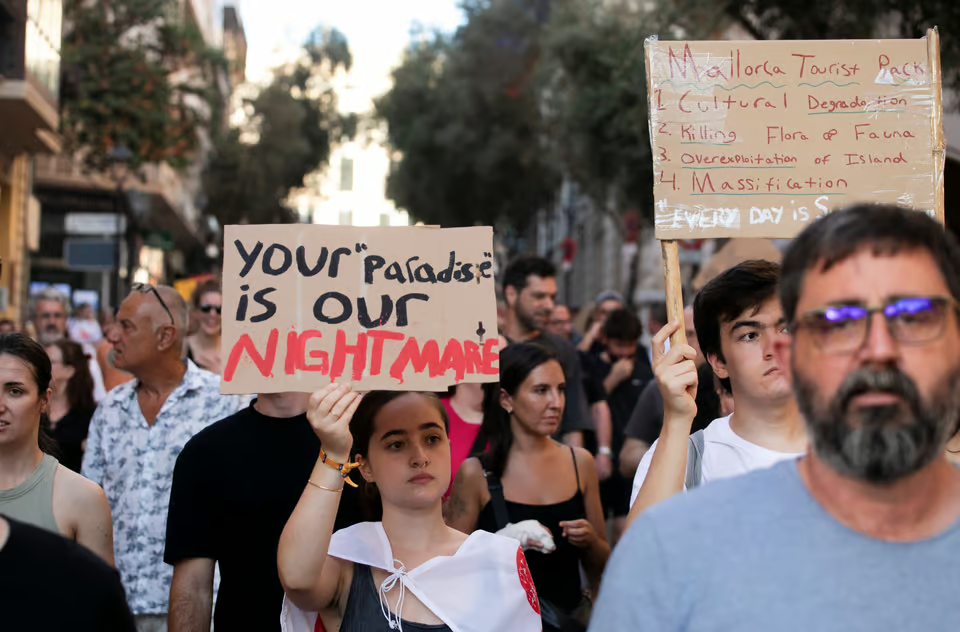
Mallorca is the largest island in Spain and one of the most attractive tourist destinations in the Mediterranean. Fewer than a million people live on the island, but last year alone, it welcomed 12.5 million tourists. A portion of the population had enough and organized large protests against tourism. The whole world reported on it. The island’s largest city, Palma, is covered in graffiti expressing hostility toward tourists. The message Mallorca’s residents sent to the world last year was very clear: “Less tourism, more life.”
It seems the tourists listened. In the first five months of 2025, Mallorca recorded a 2% increase in foreign tourist arrivals but a 5% drop in overnight stays. Hospitality businesses saw an even greater decline — traffic is down by as much as 20% compared to the same period last year.
You might be wondering — how is it possible that there are more arrivals, but fewer overnight stays and less tourism revenue? The answer might be quite simple. Responding to the demands of protesters in Mallorca and other tourist destinations across Spain, the Spanish government tightened accommodation laws this year, primarily targeting small private renters. Now, landlords must obtain consent signatures from all neighbors to register a tourist rental. This hasn’t reduced the number of accommodations, but has increased the amount of “under-the-table” rentals. More and more tourists are coming for weekend stays as “friends and family,” which doesn’t need to be registered as tourist accommodation — and fewer are being officially recorded.
People are still coming to the island — even more than before — but they go out less and spend less. They try to disturb locals as little as possible. Although the government tried to achieve what they call “sustainable tourism development”, i.e., attracting fewer but higher-quality guests who would spend more, the result was the opposite — now they have more guests who spend less.
The peak of the season is underway, and representatives of hospitality, hotel, and other related sectors are increasingly vocal in criticizing last year’s protests, as they become aware of how much damage the protests have caused. Hotels, even at the height of the season, are advertising with banners that literally say: “Tourists are welcome here.”
Juanmi Ferrer, president of the hospitality guild, says the messages from the protests “scared off the guests.”
Miguel Pérez-Marsá, president of the nightclub association, warns: “We drove away the tourists who matter to us. They no longer feel welcome, so they go elsewhere.” Exact figures for June and July will be known only in September, but based on early feedback from hoteliers, it seems the British market has seen the biggest drop.
Pedro Oliver, president of the excursion sales guild, says their revenue also dropped by 20%.
“If you generate negative news that echoes in other countries, tourists will choose to go elsewhere on vacation. We’re sending the message that we don’t want tourists and that everything here is overcrowded.”
It’s not just those directly working in tourism who are complaining, but many others whose jobs depend on the success of the industry — such as transport workers, taxi drivers, and more. A columnist for the local English-language portal, Majorca Daily Bulletin, notes how intriguing it is that there are no protests against tourism now, in the middle of the season. Even leftist activists have gone quiet once they realized the consequences their activism had.
“Be careful what you wish for, because it might come true,” he warns.
Let’s not forget — the protests in Mallorca and other Spanish cities were enthusiastically covered by media, always with the remark: “The Spaniards protest, while others remain silent and endure.”
Of course, even state-funded outlets took the opportunity to call other countries to rise up against their own bread and butter.
A climate-focused portal, funded by European taxpayers via the Government’s Electronic Media Agency, published a very xenophobic article at the time, inciting hostility toward foreign tourists in many Europe countries. They also fail to realize they live off the same tourism industry, and without it, Prime Ministers would have to cut spending, with them likely being the first to lose funding since they’re of no practical use. It would be interesting to see what that crowd — used to living off taxpayer money — would do then.
About the Author


Mario Hoffmann is an independent analyst and writer covering global economics, geopolitics, and international affairs. With a background in history and politics, he writes for EconoPuls to provide in-depth context on the stories shaping our world.


